

Shoulder pain is one of the most common orthopedic problems today. Many people ignore early shoulder stiffness or mild pain thinking it will go away on its own. However, in some cases shoulder pain gradually becomes worse, making simple daily activities like lifting the arm, combing hair, or even sleeping difficult.
Two conditions that often confuse patients are Frozen Shoulder and Shoulder Joint Damage requiring Replacement Surgery. Many people think both problems are the same, but in reality they are very different conditions with different treatments.
Understanding the difference between frozen shoulder treatment and shoulder replacement surgery can help patients make the right decision at the right time.
The shoulder joint is one of the most flexible joints in the human body. It allows movement in almost every direction including lifting, rotating, and stretching the arm.
However, this flexibility also makes the shoulder vulnerable to injuries and degenerative problems. Some of the most common causes of shoulder pain include:
When shoulder pain continues for months and movement becomes restricted, doctors usually evaluate whether the condition is frozen shoulder or a more severe joint damage that may require shoulder replacement surgery.
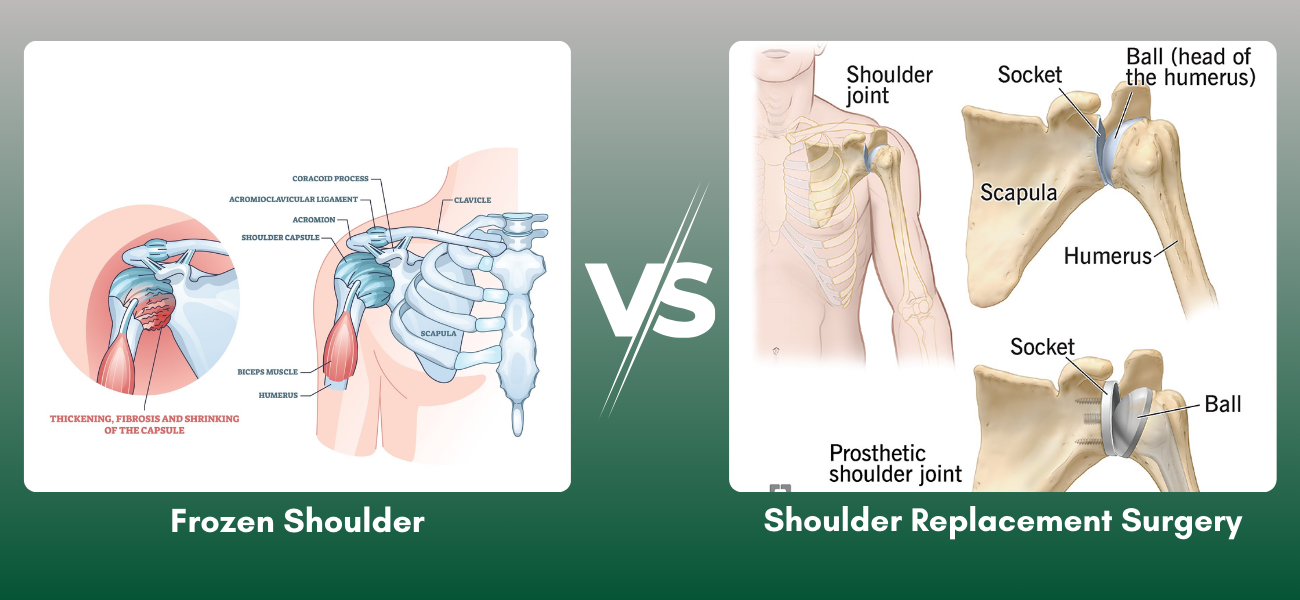
Frozen shoulder, medically known as adhesive capsulitis, is a condition in which the shoulder joint becomes stiff and painful due to inflammation and tightening of the joint capsule.
The condition usually develops gradually and progresses through different stages.
Many patients first notice that they cannot lift their arm completely. Over time the shoulder becomes more painful and movement becomes extremely limited.
Frozen shoulders can affect people between the age of 40 and 60, especially those with diabetes or previous shoulder injuries.
Several factors can increase the risk of frozen shoulders. Some of the most common reasons include:
In many cases patients ignore early symptoms, which allows the condition to worsen over time.
Frozen shoulder usually progresses in three stages.
Pain gradually increases and shoulder movement starts becoming difficult.
Pain may slightly reduce, but stiffness becomes severe and the shoulder loses mobility.
Movement slowly starts returning, but recovery can take several months.
Without proper treatment some patients may suffer from shoulder stiffness for more than a year.
Most patients with frozen shoulders can recover without major surgery if the condition is treated at the right time.
Physical therapy is usually the first step in frozen shoulder treatment. Specific exercises help improve shoulder mobility and reduce stiffness.
Doctors may prescribe anti-inflammatory medicines to reduce pain and swelling.
In some cases steroid injections are used to reduce inflammation inside the shoulder joint.
If conservative treatments do not work, doctors may recommend arthroscopic frozen shoulder surgery. This minimally invasive procedure releases the tight capsule around the joint and restores shoulder movement.
Arthroscopy is performed using small incisions and a tiny camera, which helps the surgeon treat the problem with precision.
Recovery after arthroscopic surgery is usually faster compared to traditional open surgery.
While frozen shoulder affects joint movement, shoulder replacement surgery is performed when the shoulder joint itself becomes severely damaged.
This damage can occur due to arthritis, fractures, or long-term wear and tear of the joint.
In shoulder replacement surgery, the damaged parts of the shoulder joint are replaced with artificial implants designed to restore smooth joint movement.
Doctors may recommend shoulder replacement surgery when patients experience severe joint damage caused by conditions such as:
Patients who cannot perform basic activities due to severe shoulder pain may benefit from shoulder replacement.
Modern orthopedic surgery offers different types of shoulder replacement procedures depending on the patient’s condition.
In this procedure both the ball and socket of the shoulder joint are replaced with artificial implants.
Only the damaged part of the joint is replaced while the healthy part remains intact.
This procedure is used when rotator cuff muscles are severely damaged and cannot support a normal shoulder replacement.
Each procedure is carefully planned based on imaging studies and patient condition.
Many patients become worried when they hear about shoulder surgery. However, frozen shoulder and shoulder replacement are completely different situations.
Frozen shoulder usually involves stiffness and inflammation around the joint, while shoulder replacement deals with structural damage of the joint itself.
Most frozen shoulder patients recover through physiotherapy or arthroscopic treatment, whereas shoulder replacement is usually reserved for severe arthritis or joint destruction.
Understanding the difference helps patients avoid unnecessary fear and focus on the right treatment.
Shoulder pain should never be ignored when it starts interfering with daily activities.
Patients should consult an orthopedic doctor if they experience:
Early diagnosis often allows doctors to treat shoulder problems before they become severe.
Recovery time depends on the type of treatment performed.
Patients undergoing physiotherapy for frozen shoulders may see improvement over several weeks or months.
Arthroscopic shoulder surgery generally allows faster recovery because it is minimally invasive.
Shoulder replacement surgery requires structured rehabilitation, but many patients regain significant pain relief and improved mobility after recovery.
Regular physiotherapy and proper follow-up care play a crucial role in successful shoulder treatment.
Advanced orthopedic care today offers multiple treatment options for shoulder problems ranging from conservative therapies to minimally invasive arthroscopic procedures and joint replacement surgeries.
Patients suffering from persistent shoulder pain or restricted movement should seek professional evaluation from an experienced orthopedic specialist.
In Delhi, Dr. Apoorv Dua is known for his expertise in advanced joint care and orthopedic procedures including shoulder treatments, arthroscopic surgery, and joint replacement. His patient-focused approach emphasizes accurate diagnosis and personalized treatment plans based on the severity of the condition.
Consulting an experienced orthopedic surgeon can help patients understand whether their condition requires physiotherapy, arthroscopic treatment, or more advanced surgical intervention.
Shoulder pain can significantly affect quality of life if left untreated. Many patients confuse frozen shoulders with serious joint damage, which often leads to unnecessary anxiety or delayed treatment.
Frozen shoulder is primarily a condition of stiffness and inflammation that can often be treated successfully with physiotherapy or arthroscopic surgery. On the other hand, shoulder replacement surgery becomes necessary only when the shoulder joint suffers from severe structural damage such as advanced arthritis or fractures.
Understanding the difference between these conditions allows patients to seek timely treatment and avoid long-term complications.
If you experience persistent shoulder pain, stiffness, or difficulty moving your arm, consulting an experienced orthopedic specialist can help identify the problem early and guide you toward the most effective treatment.
Frozen shoulder and shoulder arthritis are two different conditions, although both can cause pain and limited movement in the shoulder joint. Frozen shoulder happens when the capsule surrounding the shoulder joint becomes inflamed and tight, leading to stiffness and restricted motion. The joint structure itself usually remains normal. Shoulder arthritis, on the other hand, occurs when the cartilage inside the joint gradually wears away, causing the bones to rub against each other. This leads to chronic pain, swelling, and joint damage. Frozen shoulders can often improve with physiotherapy and minimally invasive treatments, while advanced arthritis may sometimes require shoulder replacement surgery if the joint becomes severely damaged.
Yes, in many cases frozen shoulders can heal without surgery. Most patients respond well to conservative treatments such as physiotherapy, stretching exercises, anti-inflammatory medications, and sometimes steroid injections. These treatments help reduce inflammation and gradually restore shoulder mobility. However, recovery may take several months. If the stiffness and pain remain severe despite proper treatment, doctors may recommend arthroscopic frozen shoulder surgery to release the tight capsule and improve movement. Early diagnosis and proper rehabilitation greatly increase the chances of recovery without major surgery.
Frozen shoulder surgery is usually considered when non-surgical treatments fail to provide relief. If a patient experiences severe stiffness, limited arm movement, and persistent pain for more than six months despite physiotherapy and medications, doctors may recommend arthroscopic surgery. During this minimally invasive procedure, the surgeon releases the tight capsule around the joint to restore normal movement. Arthroscopic frozen shoulder surgery is generally safe and allows faster recovery compared to traditional open surgery.
Shoulder replacement surgery is recommended when the shoulder joint is severely damaged and other treatments cannot relieve pain. Patients who suffer from advanced shoulder arthritis, major fractures, or severe rotator cuff damage may require joint replacement. Common signs include constant shoulder pain, difficulty performing everyday activities, and significant loss of shoulder function. An orthopedic surgeon usually confirms the need for replacement through clinical examination and imaging tests such as X-rays or MRI scans.
Shoulder replacement surgery is considered a safe and effective procedure when performed by an experienced orthopedic surgeon. Modern surgical techniques and advanced implants have significantly improved the success rate of joint replacement procedures. Most patients experience substantial pain relief and improved shoulder function after recovery. Like any surgery, there are some risks such as infection or implant complications, but these are relatively rare when the procedure is performed in a well-equipped medical facility.
Recovery from shoulder replacement surgery usually takes several weeks to a few months. Patients may start gentle movements within a few days after surgery, followed by a structured physiotherapy program to restore strength and flexibility. Most people can resume normal daily activities within two to three months, although complete recovery may take up to six months depending on the individual’s health and rehabilitation progress.
Arthroscopic surgery is a minimally invasive procedure used to treat frozen shoulders when conservative treatments are not effective. During the procedure, the surgeon inserts a small camera called an arthroscope into the shoulder joint through tiny incisions. Specialized instruments are then used to release the tight capsule and remove inflamed tissue. Because the surgery involves small incisions, patients usually experience less pain, minimal scarring, and faster recovery compared to traditional surgery.
In most cases frozen shoulder improves permanently after proper treatment and rehabilitation. However, some patients may experience mild stiffness or discomfort if they stop exercises too early or if underlying conditions such as diabetes are not well managed. Regular shoulder exercises and maintaining good joint mobility can significantly reduce the chances of recurrence.
Shoulder replacement surgery is usually recommended for patients who have severe joint damage that cannot be treated with other methods. Although the procedure is more common in people above the age of 50, it can also be performed in younger patients if the joint is severely damaged due to injury or arthritis. The decision depends more on the severity of the condition rather than age alone.
Patients experiencing persistent shoulder pain, stiffness, or limited movement should consult an experienced orthopedic doctor specializing in joint and shoulder treatments. An orthopedic specialist can diagnose the exact cause of the problem and recommend appropriate treatment options such as physiotherapy, arthroscopic surgery, or shoulder replacement if necessary. In Delhi, specialists like Dr. Apoorv Dua focus on advanced orthopedic care including joint preservation, arthroscopic procedures, and joint replacement surgeries to help patients regain mobility and reduce pain.

Dr Apoorv is one of the best orthopaedic surgeons in South Delhi. There are multiple streams of medical sciences in which he has a specialisation. Some of the major areas are Hip, Knee and Shoulder Replacement and Reconstruction, FIFA Diploma in Football Medicine (Switzerland), IFICS Fellowhip in Paediatric fractures.
Dr Apoorv Dua Clinic © 2026 | Designed by Artistry Media